
A Gentle Wellness Practice
Breathing Techniques for Stress
Simple breathing techniques for stress include slowing your exhale, box breathing and belly breathing. Each takes only a minute or two and can help you feel a bit steadier before a hard conversation, after a tense email or while lying awake. This is wellness information rather than treatment, and breath should always feel comfortable. If a technique makes you dizzy or uneasy, return to your normal breathing and try something else.
Keep the Breath Comfortable
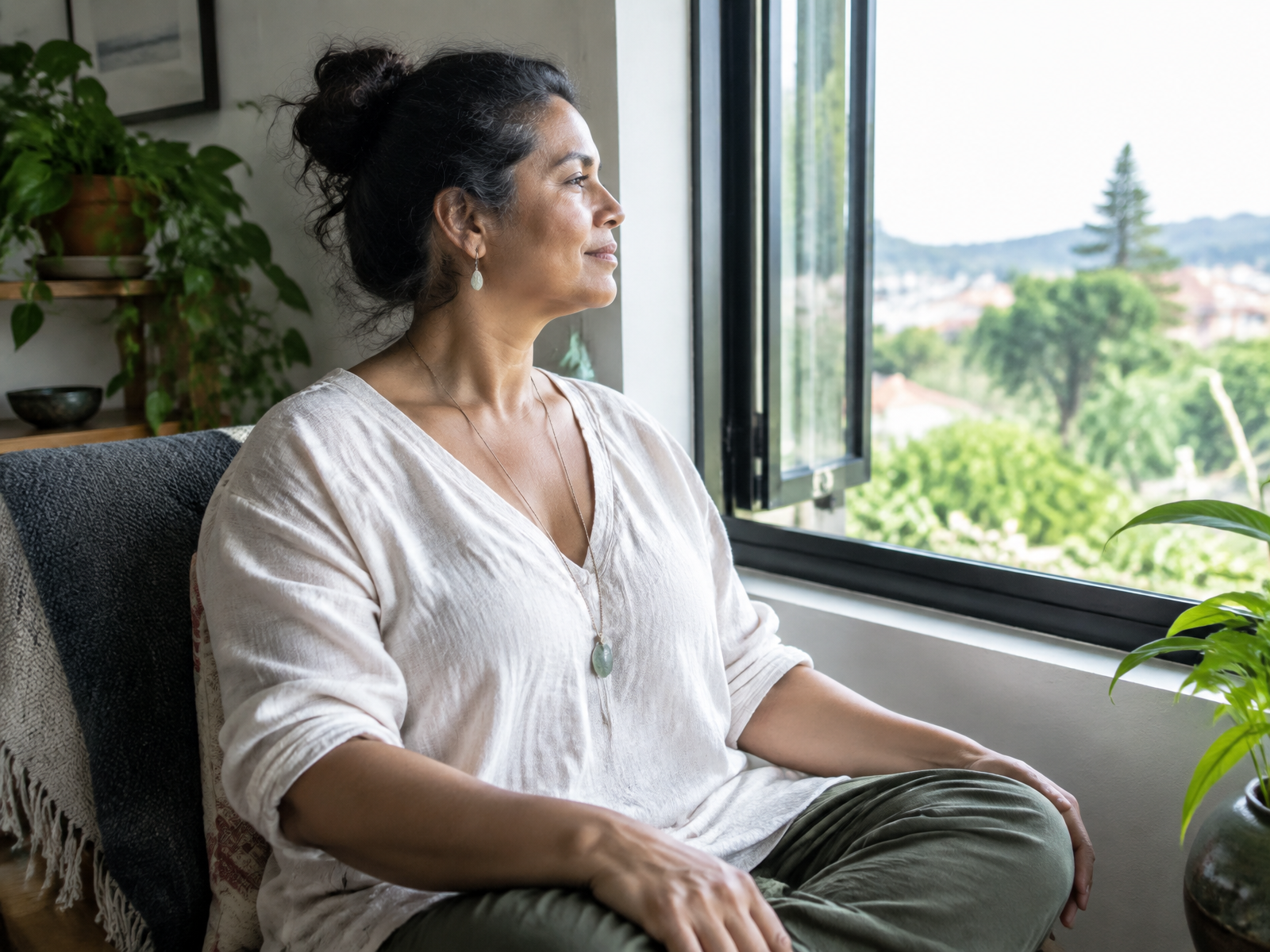
Start by noticing your breath without changing it. Sit or lie in a position that feels supported, let your shoulders drop and breathe through your nose if that is comfortable. You do not need to take huge breaths; gentle is enough. Many people find it easier to begin with eyes open, looking at a spot on the floor. If you have a respiratory or heart condition, or if you are pregnant, check with your health care provider before trying new breathing practices, and stop anytime you feel lightheaded.
Try a Longer Exhale
The first practice lengthens the out breath. Breathe in through your nose for a count of four. Breathe out slowly, through your nose or pursed lips, for a count of six. Repeat for about a minute, keeping it relaxed. Next, try box breathing: inhale for four, hold gently for four, exhale for four, hold for four, and trace an imaginary square with your finger if that helps. Finally, try belly breathing: place one hand on your chest and one on your belly, and breathe so the lower hand rises more than the upper one. Each of these can be practiced for just a few rounds. With the longer exhale, the extended breath out tends to help people feel calmer. With box breathing, the steady counting gives a busy mind something simple to follow, which is why some people like it before presentations or difficult phone calls. Belly breathing helps you notice whether you tend to breathe high in your chest. Choose the one that feels most comfortable, and skip any holds that feel strained.
Know When to Stop
Stop if you feel dizzy, tingly, short of breath or more anxious; for some people, focusing on the breath brings up discomfort, especially after trauma. In that case, try noticing your feet on the floor, holding something cool or naming five things you can see instead. Short practices work well woven into ordinary moments: at a red light, before walking into your house after work or while waiting for the kettle. Consistency tends to matter more than length. You might also combine breath with gentle movement. Rolling your shoulders on an inhale and dropping them on an exhale, or raising your arms overhead as you breathe in and lowering them as you breathe out, can release some physical tension. Keep movements slow and within an easy range. If you enjoy this, a short routine in the morning or at the end of the workday can become a small ritual of care that signals a transition between parts of your day.
Questions to Ask Yourself
Which technique felt most natural, and which felt awkward? Were there times today when a minute of slower breathing might have helped? Do you tend to hold your breath when concentrating or stressed? What cue could remind you to pause, such as a sticky note on your laptop or a phone reminder? How did your body feel before and after practicing? Noticing these details helps you build a practice that actually fits your days.
When It May Help to Talk to Someone
Breathing can be a helpful tool, yet it is not a replacement for care when stress or anxiety feels overwhelming or persistent. In my sessions, I sometimes weave in breathing and yoga based techniques when they help, alongside approaches such as CBT and mindfulness. I work with adults in Maryland by video on weekdays. A free consultation gives you room to ask whether this kind of support could fit you.
Practical Focus
What We Can Work On
- Finding a comfortable breathing pace
- Using short practices during busy days
- Noticing tension before it builds
- Pairing breath with other coping skills
Keep Exploring
Related Pages



Your Next Step
Ready to put yourself on the list?
Start with a free consultation. Therapy is available by secure video for adults located in Maryland.
Book a Free Consultation