
A Quieter Night
How to Stop Overthinking at Night
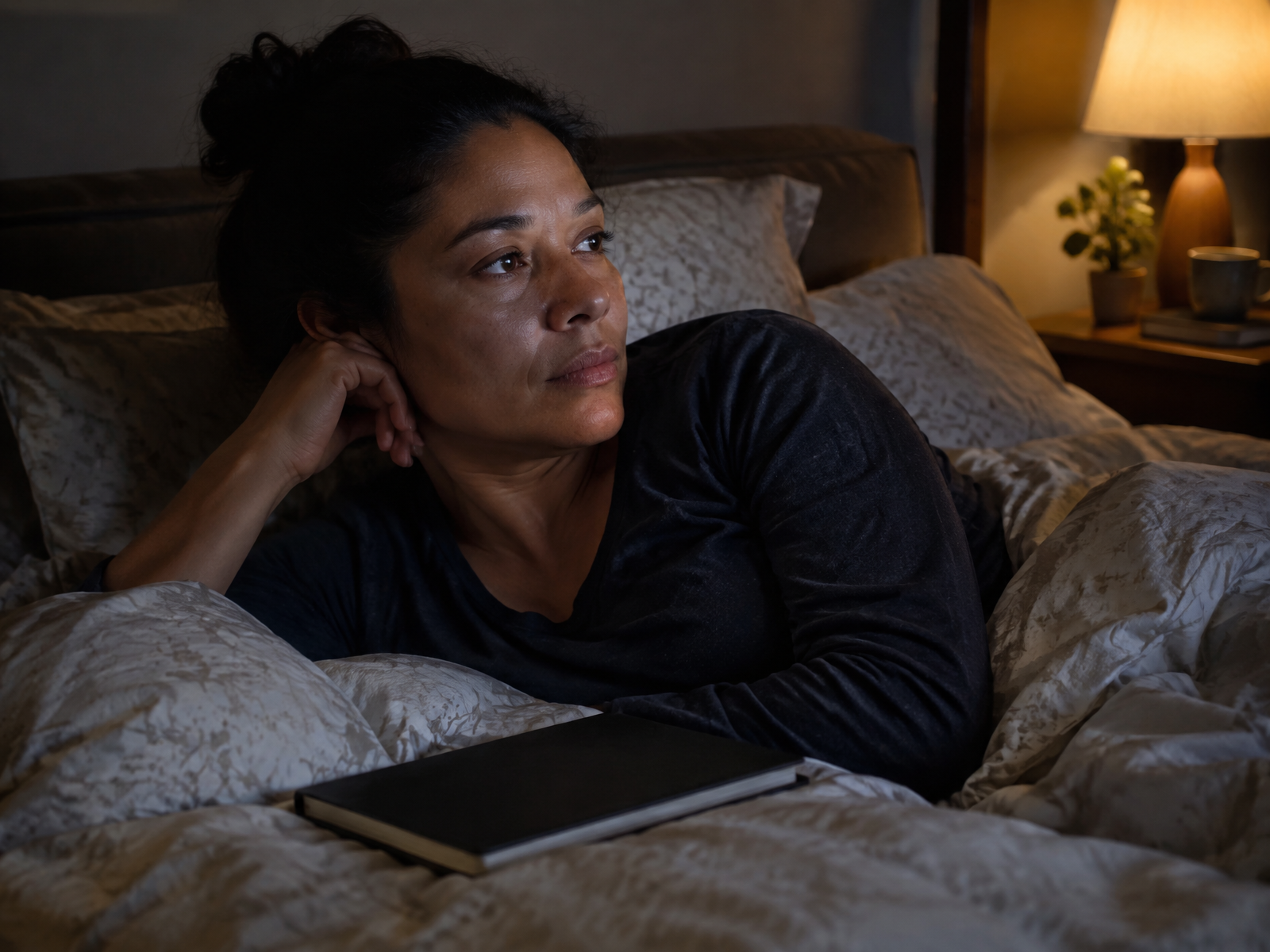
To stop overthinking at night, give your worries somewhere to go before bed, such as a short written list for tomorrow, and follow the same calming wind down each evening. Nighttime is often the first quiet moment of the day, so the mind finally gets its turn to replay conversations and plan ahead. You cannot force thoughts to stop, but you can make bed a place for rest rather than problem solving.
Why Thoughts Get Louder at Bedtime
All day your attention is claimed by meetings, meals, kids and messages. Once the lights go out, there is nothing left to crowd out the unfinished business: the comment your manager made, whether you locked the back door, what to do about your son's grades. Being tired also makes problems look bigger, so a manageable concern at noon can feel urgent at one in the morning. Understanding this helps you respond to the thoughts as a nighttime habit of the mind instead of an emergency that needs solving right now.
Move Planning Out of Bed
About an hour before bed, sit at the kitchen table with a notepad for ten minutes. Write down what is on your mind, and for each item, one next step and when you will take it, such as "email the teacher Wednesday morning." Then close the notebook. If a thought returns in bed, you can tell yourself, "That is on the list." Keep a pen by the bed for anything new, jot a single line and set it aside. The goal is to separate planning time from sleeping time. Screens make this harder. Scrolling news or email in bed feeds your brain fresh material to chew on, and bright light can delay drowsiness. Caffeine after mid afternoon, a late glass of wine or a heavy dinner may also keep your body more alert than you expect. None of this means you are doing bedtime wrong. It simply means your evening might be set up for thinking rather than resting, and a few small adjustments can shift the balance.
Practice a Repeatable Wind Down
Choose a short sequence you can repeat nightly: dim the lights, put your phone to charge outside the bedroom, wash your face, stretch gently for a few minutes and read something light. A slow breathing pattern, such as inhaling for four counts and exhaling for six, can signal the body that the day is ending. If you are awake and frustrated after twenty minutes or so, get up, sit somewhere dim and return when drowsy. Consistency matters more than finding a perfect routine. When a worry pops up anyway, try labeling it rather than arguing with it: "There is the thought about the work presentation again." This is a mindfulness skill, and it creates a little distance. Then bring your attention to something neutral, like the feel of the sheets or the sound of a fan. If your mind jumps back ten times, gently return ten times. It is not failing; it is practicing, and the pull often weakens with repetition.
Questions to Ask Yourself
Which thoughts show up most often at night: work, family, health, money or old regrets? Do they feel like problems you can solve, or worries without a clear action? What are you doing in the hour before bed, and does it wind you up or down? Do you have any time during the day to think without interruption? If you set aside fifteen minutes of worry time in the late afternoon, would the nighttime spiral change? Testing one idea for a week gives you real data about what helps you.
When It May Help to Talk to Someone
If nighttime rumination is leaving you exhausted, affecting your mood or making you dread bedtime, talking with a therapist may help. CBT offers practical tools for anxious thinking and for sleep habits, and mindfulness can change your relationship with thoughts that will not stop. I work with adults in Maryland by video Monday to Friday. You can use a free consultation to describe your nights and decide whether my approach fits what you need.
Practical Focus
What We Can Work On
- Separating planning time from sleep time
- Building a steady evening wind down
- Responding to worries without wrestling them
- Easing anxiety that shows up at night
Keep Exploring
Related Pages



Your Next Step
Ready to put yourself on the list?
Start with a free consultation. Therapy is available by secure video for adults located in Maryland.
Book a Free Consultation